
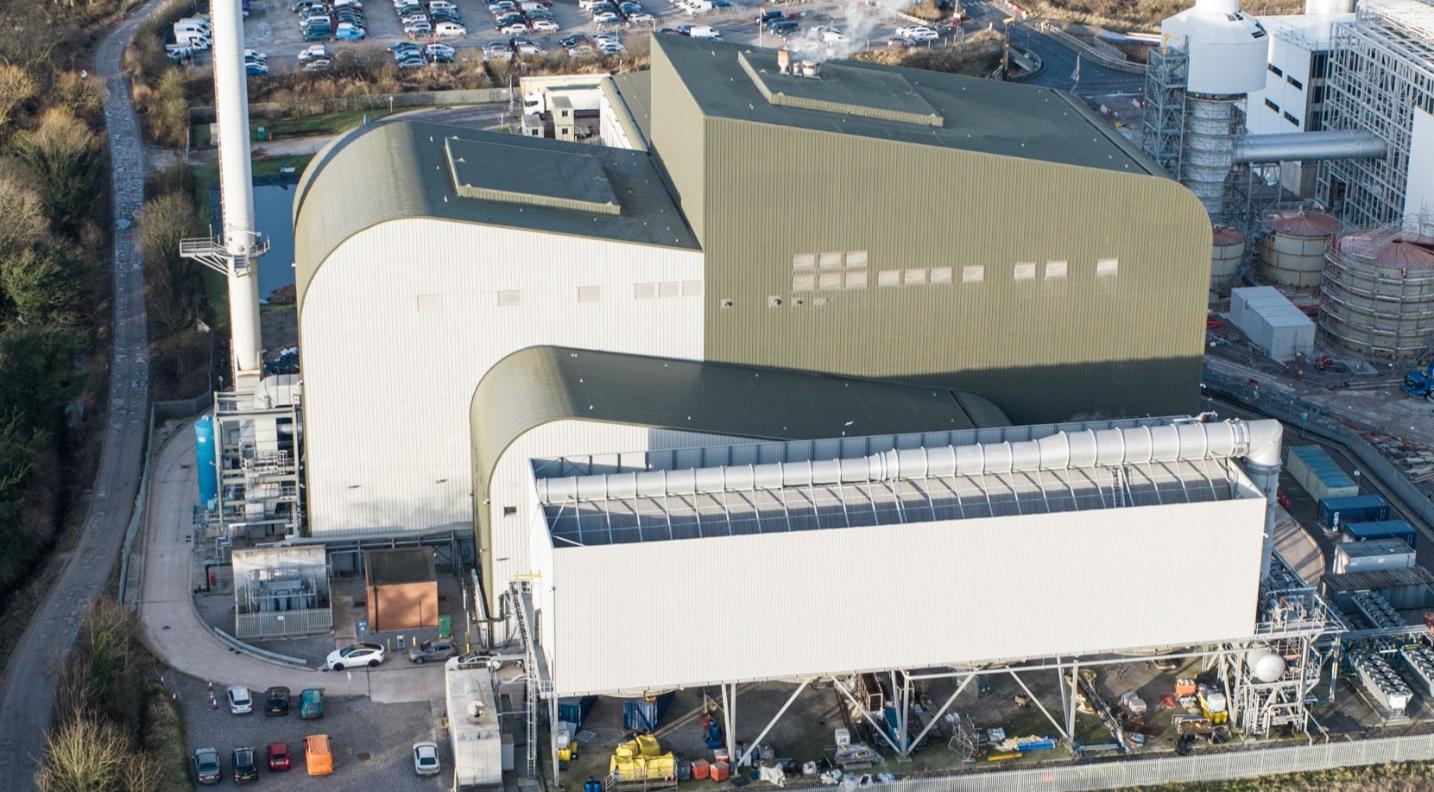
Full plant performance upgrade
Key challenges
Ince Bio Power is a 21.5 MW fluidised bed, Outotec gasifier unit firing 170,000 tonnes of waste wood per annum. The plant was suffering from combustion instability, resulting in high gasifier peak flame temperatures. It was also suffering from large deposits of slag forming on the walls and ultimately falling onto the bed. This was negatively impacting on availability and therefore MWe output.
RJM Solution 1 – New oFGR system
Numerical modelling followed by a full CFD study, confirmed that by installing an oFGR (Overfire Flue Gas Recirculation) system with OFA nozzle improvements would reduce peak flame temperatures, thereby reducing slag formation by preventing the excessive build-up of slag on the gasifier walls. RJM’s detailed analysis work included the creation of new simulation tools to calculate the combustion temperature at different levels in the gasifier, with varying levels of flue gas recirculation. This enabled RJM to calculate with greater accuracy what percentage of FGR gases would be needed to reduce the propensity of ash particles to melt and form slag.
Results
The oFGR system, designed and engineered in-house by RJM, has significantly reduced slag formation and the slag that still forms is much less fused than pre-upgrade. Trips caused by slag falls are now virtually eliminated, as the bed can break up the material that sheds during the campaign. It has also shortened the turnaround period between campaigns, with gasifier cleaning reduced from four days down to a single 12-hour shift.
Following these and other performance improvements designed and implemented by RJM, Ince recently had its longest continuous generation campaign of 160 days, whereas a typical run before these upgrades were implemented was of 25 days duration.
RJM Solution 2 – New IMPULSE® Cleaning system
Seeking to build on the success of the first phase of upgrades, operator Evero Energy tasked RJM to help keep the gasifier clean of large amounts of ash build-up and to improve boiler performance by more efficient cleaning, enabling improved heat pick-up.
RJM identified that its IMPULSE® Cleaning technology would be ideally suited to this task.
In the gasifier, large ash accumulations were falling onto the bed and killing the bed fluidisation. Every time this happened, the plant had to be taken offline to remove the material – a major cause of unplanned outages which negatively impacted on availability. To achieve this, four IMPULSE® Cleaners were installed in the gasifier to dislodge any major ash build-up on the slopes.
In the boiler and economiser, seven IMPULSE® cleaners were installed. By improving the cleaning of these areas, the aim was to increase load by reducing the pressure drop through the system and to maintain the rate of heat transfer from the as-clean condition.
One key feature of the IMPULSE® cleaning system is that it is operated pro-actively. Unlike many systems that are used to dislodge deposits after they build up, the IMPULSE® system cleans pro-actively, thus preventing the build-up occurring. Typically, it is set to fire every 60 minutes, ensuring that heat transfer surfaces are kept clean to maximise the heat rate of the plant. A deposit is at its weakest in the early stage of its formation, so this approach is highly effective.

Locations of the IMPULSE® units across the plant
Results
Across the three IMPULSE® locations, RJM and Evero were aiming for two key benefits. Firstly, increased availability at the gasifier of 5%, equivalent to an extra 19 days of additional operation in a year; and secondly, on the boiler and the economiser, increased MWe. The resulting performance of the system has shown a clear increase in load of at least 1 MWe. The condition of the gasifier is significantly cleaner, so a 5% increase in availability is realistic.
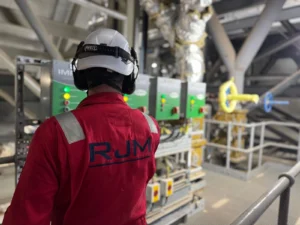
IMPULSE® control units at Ince Bio Power
The financial benefit of this is significant. 1 MWe exportable electricity over an operational year, plus a minimum of 19 days of additional generation, means that the system will pay back in about 12 months.
One feature of the IMPULSE® system is that the cleaning does not lead to refractory or tube damage – especially from ash impact. Evero had previously suffered problems with tube failures in the superheaters caused by the design of the superheaters and the operation of the steam sootblowers. As a result of the performance of the current system, Evero has such confidence in the IMPULSE® system that it has commissioned a further five IMPULSE® units for installation later this year to clean the superheater banks. This five unit install will replace all the sootblowers and the need for additional online cleaning.
Learn more: RJM IMPULSE Cleaning Brochure June 2025



NOx reduction project to meet Phase 1 RACT regulations
Engineer, model and supply new NOx reduction system